Introduction To Project Stratobear:
Project Stratobear is a senior project for three students at The Marine Academy of Science and Technology. The project will center around the goal of studying the upper atmospheric effect on Tardigrades (Waterbears). A Tardigrade is a small water dwelling micro-animal with six legs which have been hypothesized to have come from outer space. The Tardigrade is an extremophile which means it can survive in extreme conditions of heat and cold. The project involves constructing a weather balloon probe that would mimic the atmospheric effects of space to Earth entry. Joseph Nardone’s Project Stratobear problem is to design a compartmentalized probe capable of protecting Connor Varley's electronic equipment while also exposing Tardigrades to the upper atmospheric conditions. The final design solution consists of a horizontally compartmentalized probe that exposes the bottom compartment, while insulating the top.
.jpg) |
| The Project Stratobear final solution. |
How The Project Fits Into Systems Engineering:
The Project Startobear space probe is an innovation of previously manufactured weather balloon based research projects. The project does not invent a new experiment, the project modifies previous experiments and improves on design. The probe is an example of a closed contained technological system as all required interaction occurs within the Project Stratobear’s team design system including the balloon, probe, and electronics areas. The project was mostly based on aerospace systems design principles as it will be traveling into the upper atmosphere. The project will be constructed using a soviet collectivism method.
 |
| Systems engineering consists of multiple parts working together to form one goal. Project Stratobear has three parts, electrical, lift, and probe construction. |
Manufacturing:
 |
| An example of Soviet Manufacturing. All pieces are made separate and then brought together to form final product. |
The project will be constructed using a soviet collectivism method. This means that all of the group members will have their piece of the project to work on, and it will all unify in the end. During our manufacturing project we will be involving a few different engineering types. These engineering categories include: biotechnology because of the relation to Tardigrades, metalworking because of the plexi-glass pieces, and plastics because of the insulation foam body. Tardigrades need to be properly contained in their respective biological transport containers (In Project Stratobear’s case these are petri-dishes). Plexi-glass must be cut on shop equipment. Plastic polymers such as the insulation foam must be cut using shop equipment.
 |
| An example of workshop similar to the one Project Stratobear was built in. |
Science Influences:
 |
| Mike Shaw, mentor for Project Stratobear. Expert on Tardigrade Research. |
 |
| Isaac Newton, physicist responsible for nearly all modern mechanics. |
 |
| Charles Fabry, scientist who discovered the layers of Earths atmosphere. |
The project has numerous scientific relations. The main relationship in our project is biology. Our project is dependent on the micro-organism the Tardigrade. As a group we must have biological knowledge about the organism the Tardigrade. This knowledge was supplemented by Tardigradeologist Mike Shaw. Physics also affects our project as we need to calculate lift, drag, tension, and static stability to carry out the project. These physical studies were provided for the most part by Isaac Newton, whose studies mostly focused on mechanical properties of the universe. Finally, astronomy is an important science to our project as we need to know about numerous atmospheric conditions. Chalres Fabry was the scientist who discovered the layers of Earth's atmosphere.
Technological Influences:
 |
| Plexiglass is a clear acrylic material that is very hard and strong but also lightweight. |
 |
| Foamboard is a very light hard material that the probe body will be constructed of. |
The project is also influenced by numerous technological factors. These include the ultra light material insulation foam, and the use of plexiglass as building materials. Without the invention of these materials the project would be extremely difficult to complete, and my solution would need to be completely modified.
Mathematical Calculations:
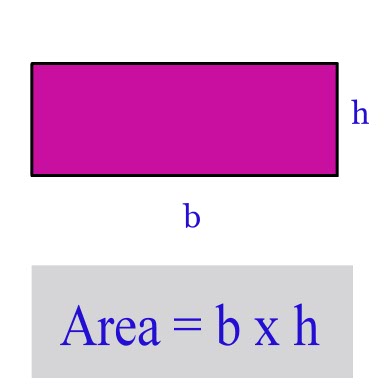
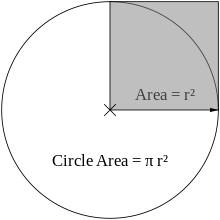
The chosen solution involved a few calculations in its construction. The first and most common calculation used was the area formula. The area formula was used to calculate the required room to store the Tardigrades and the electronic components. Another calculation that was used was the area of a circle. This was used to find the size of the plexiglass plates used in the construction. Finally some pressure formulas were used when I was purchasing the bonding material. This allowed the builder to ensure that the project would not fall apart under stresses during flight.
 |
| This formula was used to calculate the area of the plexiglass sheets. |
 |
| This formula is used to calculate the area of the foam sheets. |
 |
| This formula is used to calculate pressure in the atmosphere. |
Conclusion:
In conclusion the solution to Project Stratobear discussed today is an innovation in the aerospace engineering discipline constructed in the soviet manufacturing style. The final design solution consists of a horizontally compartmentalized probe that exposes the bottom compartment, while insulating the top. The solution required the technology of lightweight insulation polymers, required area calculations, and required knowledge of biology in relation to the microorganism the Tardigrade. Thank you for reading.
Work Cited:



No comments:
Post a Comment